


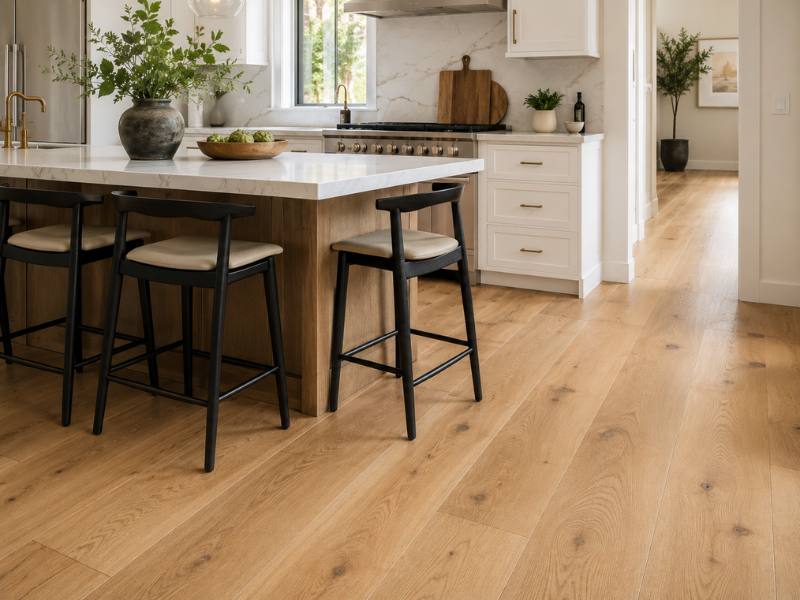
Walk into a newly finished home today and the floor often tells the story before the furniture does. Where narrow strip boards once ruled, wide planks measuring seven to ten inches across are quietly becoming the floor everyone notices. The shift is not only about looks, it is about how a room feels the moment you step inside.
We at Claerbout Furniture & Flooring have watched this preference grow with customers across Cedar Grove, Sheboygan, Plymouth, Saukville, and Port Washington. As longtime flooring experts, we love helping people picture how a wider board changes a room. When people compare hardwood options in person, the wide-plank styles are almost always the ones that make them pause.
Why bigger boards are taking over
The reason behind the trend is simple. A wider board covers more area with fewer seams, so your eye travels across a smoother, more continuous surface. That uninterrupted flow makes a floor feel calm and open, even in rooms that are not especially large.
There is also a practical side to the appeal. Quality wood, including the wider cuts, can be sanded and refinished down the road, so the floor keeps adapting as your taste changes. That kind of longevity is a big part of why so many homeowners treat it as a lasting investment rather than a quick update.
The visual payoff of a wider board
There is a reason designers keep reaching for these planks. Each board shows off more of the wood's natural grain, knots, and character, turning the floor into a feature rather than a quiet backdrop. With standard strip flooring, those beautiful details get broken up by frequent seams.
Color choice matters just as much as width here. Lighter planks keep a space feeling airy and relaxed, while richer tones bring warmth and a grounded, settled comfort. Either way, the generous board size gives the wood's personality plenty of room to come through.
Wide planks also pair well with both modern and farmhouse styles, which gives them real staying power. Add a few decor accessories and the right lighting, and a room starts to feel finished and intentional. The floor ends up doing much of the design work for you.
Wide-plank hardwood questions, answered
A few questions tend to come up once homeowners fall for the wider look. Here is what we usually share.
Are wide planks harder to install?
They do ask a little more of the person laying them, since wider boards need a flat subfloor and proper acclimation to the room. That is exactly where professional installation earns its keep, because careful prep keeps the floor flat and quiet for years. Done well, the finished result looks seamless from wall to wall, and most homeowners find the extra care more than worth it.
Will wider boards gap or cup over time?
Any solid wood moves a little with the seasons, and wider boards simply show that movement more than narrow strips do. Choosing engineered hardwood is one popular way to keep things stable, since its layered construction resists swelling and shrinking. Good acclimation and steady indoor humidity also go a long way toward keeping wide boards looking their best season after season.
Do wide planks suit smaller rooms?
This tends to be the happiest surprise for most people. Wide planks can actually make a compact room feel larger, because fewer seams encourage the eye to read the floor as one open surface. Run the boards toward the longest wall and keep the tone in step with the natural light, and a modest room can feel surprisingly generous.
See how wide planks look in your own light
We would love to help you find the boards that suit your home and your style. Ask about the shop-at-home service, and we will bring real samples to you so you can see those wide planks in the very light they will live in. Comfortable, lasting floors start with a look you can trust.


