


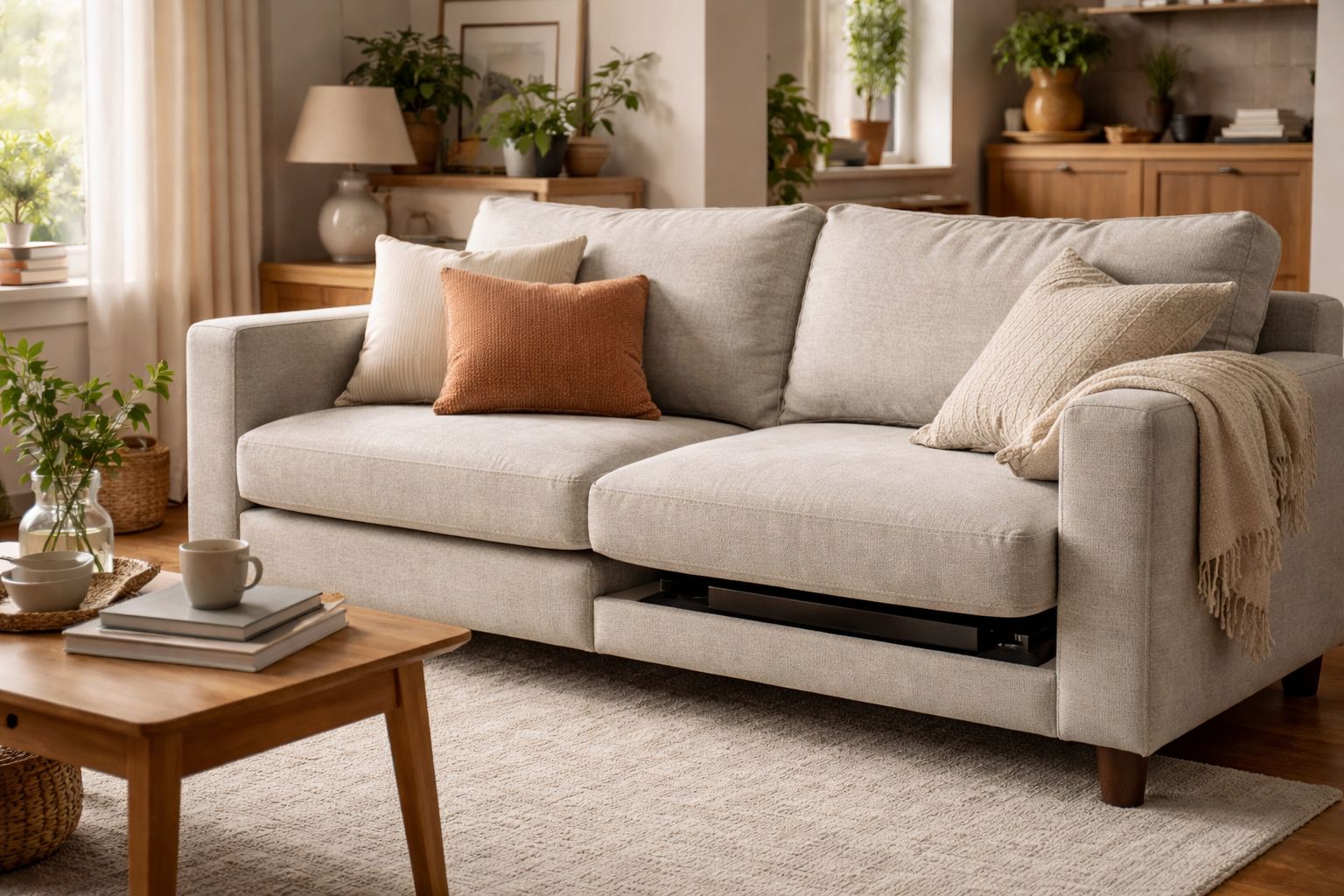
When choosing seating for a living room, family room, or reading nook, fabric often steals the spotlight. Color, texture, and pattern feel like the most obvious decision points. But long-term comfort, durability, and overall value depend far more on what sits underneath the upholstery. Frame construction plays the biggest role in how seating performs over time, even though it’s the part rarely seen or discussed.
A beautifully upholstered sofa can still fail early if the structure beneath it isn’t built to handle everyday use. Understanding why frame construction matters more than fabric helps avoid costly replacements and disappointing wear.
Why the frame determines lifespan first
The frame is the structural backbone of any seating piece. It supports body weight, anchors springs and cushions, and keeps the seating shape intact through years of sitting, shifting, and movement. When a frame is poorly built, no fabric—no matter how premium—can compensate for the loss of stability.
Well-constructed frames prevent sagging, uneven seating, and loosened joints. This is especially important for frequently used seating in living rooms and gathering spaces, where daily wear adds up quickly. Many high-quality seating options fall under thoughtfully built living room furniture, where structural integrity is prioritized over short-term appearance.
Hardwood frames vs weaker alternatives
Not all frames are built the same. Hardwood frames made from kiln-dried materials like maple, oak, or beech offer superior strength and resistance to warping. Kiln drying removes excess moisture, reducing the risk of cracking or twisting over time.
Lower-grade alternatives such as softwood, particleboard, or low-density engineered wood often break down under stress. These materials compress, loosen at joints, or split after repeated use. While they may lower initial cost, they almost always shorten the lifespan of the seating.
Choosing seating with a solid hardwood frame ensures that cushions and fabric stay properly supported for years rather than months.
How joinery impacts everyday comfort
Frame strength isn’t only about the wood itself—it’s also about how the frame is assembled. High-quality seating uses reinforced joinery such as dowels, screws, and corner blocks at stress points. These construction methods prevent movement at joints, keeping seating firm and level.
Frames held together primarily with staples or glue tend to loosen over time. This leads to squeaking, shifting, or a subtle tilt that affects comfort and posture. Proper joinery keeps weight evenly distributed, allowing cushions and springs to perform as intended.
The role of the frame in long-term comfort
Comfort isn’t just about softness. A strong frame ensures that seating maintains its shape, height, and support over time. Without that stability, cushions compress unevenly, leading to pressure points and back strain.
A well-built frame supports the body consistently, preserving the feel of the seating year after year. This is why two sofas with similar fabrics can feel dramatically different after extended use—the frame determines whether comfort holds or fades.
Fabric wears out, frames should not
Fabric is a surface layer. It will fade, stain, or show wear eventually, no matter how durable it is. The key difference is that fabric can be replaced or reupholstered if the frame beneath it remains strong.
A solid frame allows seating to be refreshed instead of discarded. This is particularly relevant when considering furniture upholstery options, where long-lasting structure makes future updates worthwhile rather than wasteful.
If the frame fails, reupholstering becomes pointless. That’s why frame quality should always come before fabric choice.
Matching frame quality to household use
Homes with active families, pets, or frequent guests put far more strain on seating than lightly used spaces. In these environments, frame construction becomes even more critical. A weak frame may look fine initially but deteriorate quickly under constant use.
Prioritizing strong frame construction ensures seating can adapt to changing lifestyles without losing support or comfort. It’s a practical decision that protects both comfort and investment.
Paying attention to what’s underneath
While fabric sets the visual tone of a room, the frame defines how seating performs day after day. Looking beyond surface appeal leads to smarter, longer-lasting choices. Seating built with solid materials, reinforced joinery, and proper construction delivers comfort that fabric alone can never guarantee.
A better seating experience begins with better construction
At Claerbout Furniture & Flooring, we help families choose seating built for real comfort and long-term use, not just good looks on the showroom floor. Our team focuses on solid frame construction, quality materials, and craftsmanship that holds up over time. To explore seating options or get guidance tailored to the way a space is used, connect with our team through the contact page.


