


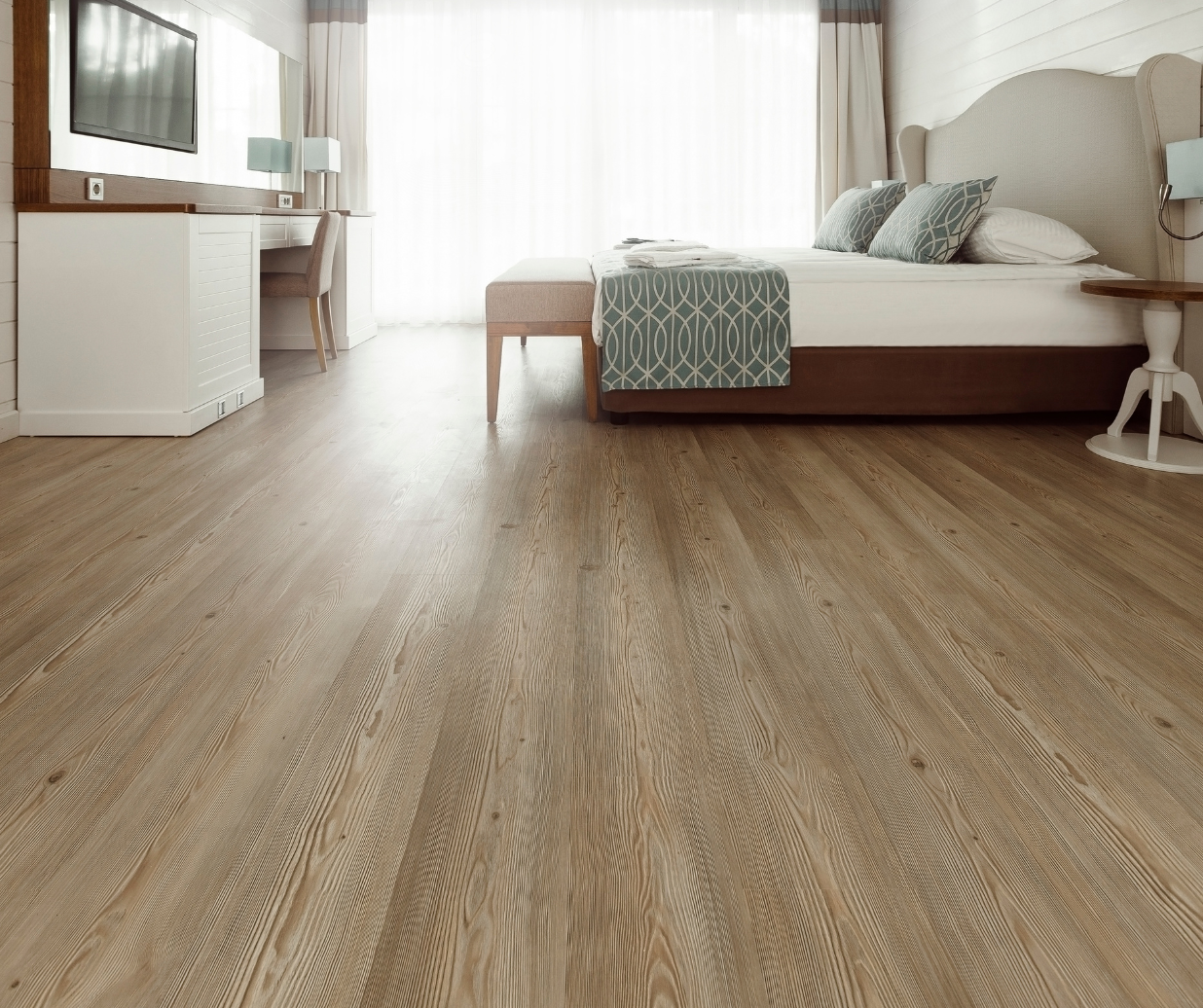
There's a lot to love about laminate. It looks like real hardwood, it stands up to busy households, and it works for almost any budget. But if your floors answer every footstep with a hollow click-clack, that charm can wear thin fast. The good news is that noisy laminate is almost always fixable, and choosing the right laminate from the start keeps things peaceful for years to come.
Here in Cedar Grove, we've helped families across Sheboygan County choose, install, and troubleshoot laminate floors since 1953. Here's what we've learned about what makes laminate loud, and how to bring the quiet back.
What causes that click-clack sound?
That familiar clicking usually isn't the laminate planks themselves. It's what's happening underneath and around them. Once you understand the cause, the fix becomes a lot clearer.
An uneven subfloor
Laminate is a floating floor, which means the planks lock together and rest on top of the subfloor rather than being nailed down. If the subfloor has high spots, dips, or leftover debris, the planks flex slightly every time you step on them. That tiny bit of movement is exactly what creates the tapping and clicking you hear.
Missing or worn underlayment
Underlayment is the thin cushioning layer between your subfloor and your laminate. It absorbs sound, smooths out minor imperfections, and gives the floor a softer, quieter feel underfoot. Skip it, or let it wear thin over the years, and every step transfers straight through to the subfloor.
Gaps and expansion issues
Laminate naturally expands and contracts as temperature and humidity change, which matters a great deal through a Wisconsin winter. Planks need a small gap around the edges of the room so they can move freely. When that gap is sealed too tight or left too loose, planks can lift, separate, and knock against one another.
How to quiet laminate floors you already have
If your existing floor has grown noisy, you don't always need to start over. A few targeted steps can make a real difference:
Find the noisy spots. Walk the room slowly and mark where the clicking is loudest so you can focus your effort where it counts.
Check the perimeter gaps. Make sure the expansion gaps along the walls haven't been sealed shut by trim or caulk.
Look for movement. Press on any loose-feeling planks to see if they shift. Movement usually points to a subfloor or underlayment issue below.
Add rugs in high-traffic areas. Area rugs are a quick, attractive way to soften sound in busy hallways and living rooms.
Call in a pro for the stubborn spots. Persistent noise often means the subfloor needs leveling or the underlayment needs replacing, which is best handled by an experienced installer.
Sometimes the smartest move is a professional look under the surface. Flooring repairs and subfloor repair address the root of the noise instead of just covering it up, and you can see the full range of our flooring services to find the right fix.
Choosing laminate that stays quiet from day one
If you're shopping for new floors, a little planning up front saves you from click-clack headaches later. Quiet laminate really comes down to three things: the plank, the layer beneath it, and the installation.
Pick a thicker, higher-quality plank
Thicker planks feel more solid and stable underfoot, and they tend to click into place more securely. When you're comparing options, ask about the wear rating and the core construction. You can explore the details on the laminate flooring page to see what suits your home and how you live in it.
Pair it with the right underlayment
The underlayment does a lot of quiet, behind-the-scenes work. Some laminate comes with an attached pad, while other floors let you choose a separate underlayment for extra sound absorption. If a peaceful home is a priority, this is not the place to cut corners.
Let a professional handle the installation
Even the finest laminate will click if it's laid over an uneven subfloor or without proper expansion gaps. Professional flooring installation makes sure the base is flat, the underlayment is right, and the planks have room to breathe. That first step is what keeps a floor quiet for the long haul.
Not sure laminate is the quietest choice?
Laminate is a wonderful all-rounder, but it isn't the only option if peace and quiet top your list. Depending on the room, a few alternatives might suit you even better:
Luxury vinyl feels warmer and softer underfoot and handles moisture beautifully. Take a look at luxury vinyl flooring if kitchens and bathrooms are on your list.
Waterproof flooring combines a quiet, comfortable feel with real peace of mind against spills. See how waterproof flooring works.
Carpet is the quietest option of all and adds instant warmth to bedrooms and family rooms. Explore carpet to walk through the possibilities.
Every home is different, and the right floor depends on your rooms, your routine, and the feeling you're after.
Let us bring the quiet back to your floors
Whether you're troubleshooting a noisy floor or planning a brand-new one, you don't have to figure it out alone. We've been helping neighbors across Cedar Grove, Sheboygan, Plymouth, Port Washington, and the surrounding communities since 1953, and we'd love to help you next.
Here's how to get started:
Shop from your couch. Ask about our shop-at-home service and we'll bring flooring samples right to your door.
Get a free in-home estimate. We'll measure your space and talk through your options with no pressure.
Reach out anytime. Have a question about your floors? Contact our team and we'll point you in the right direction.
Stop by our Main Street showroom in Cedar Grove or get in touch today, and let's create floors you'll love to walk on, quietly.


