


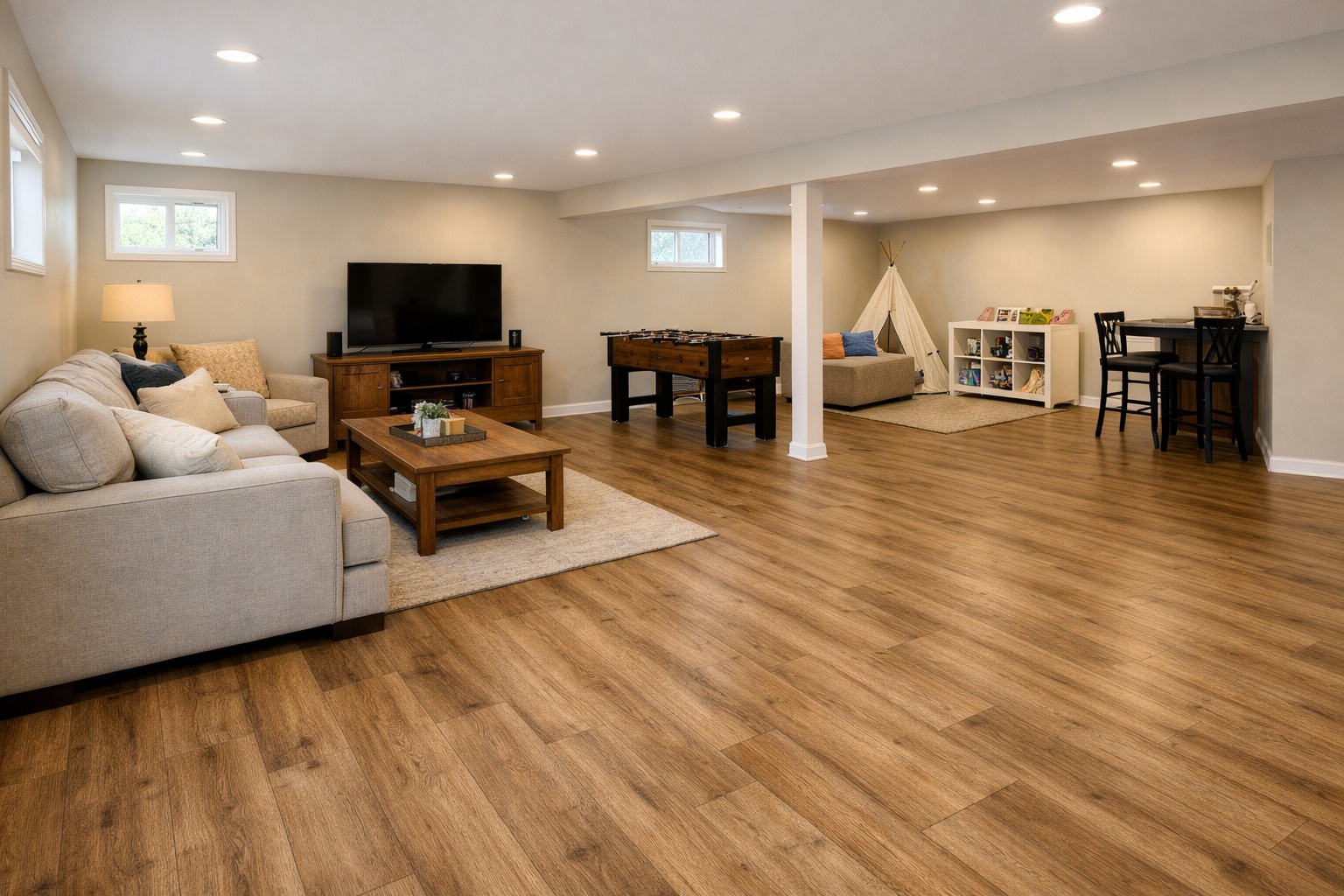
Basements in Mequon face a unique set of environmental challenges. Seasonal moisture — from spring thaws to summer humidity and autumn rains — can create damp conditions that affect whatever flooring is installed. Choosing the right basement flooring isn’t just about looks, it’s about how well the material handles moisture over time. A smart flooring choice protects the space from mold, peeling, and warping and contributes to a healthier, more comfortable lower level.
What happens when moisture meets the wrong floor
When seasonal moisture isn’t managed properly, several problems can arise. Natural wood can absorb moisture and warp or discolor. Carpet without proper barrier layers might trap dampness and foster mildew. Even some engineered products can fail if water gets underneath. For basements that see periodic moisture, the most resilient flooring options are those designed to resist water at the surface and beneath, with installation systems that allow controlled movement and drainage.
Looking at concrete as a base
The first line of defense in any basement is the slab itself. Concrete is strong and stable, but it’s naturally porous. Before any flooring goes down, professionals often evaluate slab moisture levels. Addressing high moisture with vapor barriers, sealers, or improved drainage ensures that the chosen flooring performs long term. A well-prepared concrete base makes almost any moisture-resistant flooring option work better.
Vinyl plank and tile that handle moisture well
Luxury vinyl flooring stands out as one of the best options for moisture-prone spaces. Both vinyl plank and waterproof vinyl tile are engineered to resist water at the surface and across the seams. These products don’t swell or warp when humidity spikes, making them excellent for areas that might see seasonal wetness. Many options also mimic wood, stone, and ceramic looks while providing a cushioned feel underfoot.
Advantages of vinyl flooring for basements in wetter climates include:
Waterproof core that blocks moisture entry
A range of styles that blend with modern or traditional décor
Ease of cleaning and maintenance
Compatibility with underlayment designed to reduce sound and add warmth
Porcelain and ceramic tile for long-lasting performance
Porcelain and ceramic tiles are naturally impervious to water and are often used in bathrooms and mudrooms. In seasonal moisture conditions, their dense surface does not absorb water. When installed with a proper underlayment and grout sealed against moisture, these tiles create a durable, long-lasting floor that resists staining and holds up under heavy use.
Tile can be cooler underfoot, so pairing it with radiant heat or area rugs designed for moisture-resistant spaces helps add comfort without sacrificing performance.
Engineered wood for the look of hardwood without the risk
Traditional hardwood doesn’t fare well in damp basements, but engineered wood offers a middle ground. Its multi-layer construction makes it more stable in fluctuating humidity compared with solid wood. Some engineered products are rated for below-grade environments when installed according to manufacturer guidelines, including moisture-mitigating underlayments and proper acclimation.
While not as impervious to moisture as vinyl or tile, engineered wood provides a warm, natural aesthetic while tolerating seasonal swings better than solid hardwood.
Luxury carpet options with moisture defenses
Carpet might seem like a risky choice for moisture-prone basements, but modern designs with moisture-resistant backing and synthetic fibers can work in finished lower levels that stay dry most of the year. These products resist mold and dry quickly if occasional dampness occurs. Choosing carpet with moisture-resistant pads and ensuring moisture levels are controlled in the slab improves longevity.
Carpet also adds warmth and sound absorption, which can make basements cozier gathering spaces.
Considering subfloor systems for added protection
For basements with known moisture concerns, subfloor systems designed to raise the finished floor above the slab offer another layer of protection. Products made from polypropylene or engineered panels create an air gap that allows vapor to diffuse while providing an even surface for installation. Subfloor systems work with a variety of finishes — including vinyl, tile, and engineered wood — and help reduce the risk of long-term moisture problems.
Balancing style with performance
A basement doesn’t have to sacrifice style for function. Today’s flooring products bring together beautiful designs and technical performance that handle seasonal moisture concerns with confidence. Whether the goal is a family room, gym, workshop, or guest suite, selecting a moisture-resistant solution based on lifestyle, expected use, and installation conditions results in a basement that’s both attractive and durable.
Moisture concerns don’t have to limit the potential of a finished basement. At Claerbout Furniture & Flooring, we help Mequon homeowners select flooring solutions that are built for performance and designed for lasting style. Stop into our Cedar Grove showroom or reach out to our team today — we’re here to make the process simple and dependable from start to finish.


